
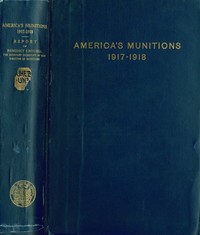
America's Munitions 1917-1918 by Benedict Crowell and United States. War Department
Officially titled 'America's Munitions 1917-1918,' this book is the U.S. War Department's own final report on the industrial side of World War I. Compiled by Assistant Secretary of War Benedict Crowell, it's not a narrative about soldiers or strategies. Instead, it's a systematic, department-by-department breakdown of everything America produced to fight the war.
The Story
Think of it as the ultimate project summary. The book opens by setting the stage: America's military was small and its industry wasn't geared for war in April 1917. Then, it methodically catalogs the response. Each chapter focuses on a type of munition. You get the specs on the Springfield rifle, the production numbers for artillery shells, the development of the Liberty truck engine, and the sudden mass production of airplanes and tanks. It details the creation of things we take for granted, like standardized gas masks and modern medical supplies. It covers the enormous logistical challenges, like building railways in France and supplying millions of soldiers with food and clothing. The 'plot' is the staggering escalation of output, told through statistics, blueprints, and photographs.
Why You Should Read It
This might sound dry, but it's genuinely fascinating. The power isn't in the prose (it's straightforward government writing) but in the overwhelming evidence it presents. You stop seeing a list of artillery pieces and start seeing a national metamorphosis. It makes abstract concepts like 'industrial mobilization' concrete. You learn that winning required perfecting the humble screw cap for an artillery shell to keep out moisture, and that America had to invent entirely new factories to make optical glass for gun sights. It’s a profound reminder that behind every historical battle, there's an army of engineers, factory workers, and logisticians who made it possible.
Final Verdict
This isn't a casual bedtime read. It's for the curious history fan who wants to go beyond the battlefield. Perfect for anyone interested in military history, industrial engineering, or World War I. If you've ever wondered 'how did they actually *do* that?' when reading about the war, this is your primary source. It's a unique and humbling look at the monumental effort required to support an army, and it will give you a deep appreciation for the home front's crucial role in victory.
This masterpiece is free from copyright limitations. Use this text in your own projects freely.
Jessica Taylor
10 months agoAfter hearing about this author multiple times, the narrative structure is incredibly compelling. One of the best books I've read this year.
David Jones
1 year agoI came across this while browsing and the clarity of the writing makes this accessible. I will read more from this author.
Ava Perez
1 year agoI didn't expect much, but the pacing is just right, keeping you engaged. I learned so much from this.
Emily Garcia
10 months agoHigh quality edition, very readable.






Thomas Anderson
3 months agoRead this on my tablet, looks great.