
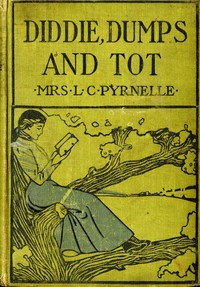
Diddie, Dumps, and Tot; Or, Plantation Child-Life by Louise Clarke Pyrnelle
Let's be clear from the start: this isn't a novel with a driving plot. Think of it more like a season of a TV show about three sisters. Diddie, Dumps, and Tot follows the daily lives of the three title characters on their father's Alabama plantation in the 1850s. Each chapter is a little story: the girls try to help make soap and create a hilarious mess, they get jealous when a fancy cousin comes to visit, they learn to sew and have a disastrous picnic, and they befriend the children of the enslaved families on the property.
The Story
The book is a series of vignettes. We see the world through the sisters' eyes. Diddie, the oldest, tries to be good and set an example. Dumps (whose real name is Mary) is sensitive and loves stories. Tot is the spoiled, playful youngest. Their adventures are simple—dealing with a mean governess, celebrating Christmas, getting scared by tales of ghosts. The 'story' is simply their childhood unfolding, filled with small triumphs, punishments, playtimes, and the rhythms of plantation life, all presented as perfectly normal from their youthful perspective.
Why You Should Read It
This is where it gets interesting. Pyrnelle wrote this in 1882, looking back on her own childhood. She paints a picture of warmth and affection between the white children and the Black men, women, and children who are enslaved. The book is dripping with nostalgia for a 'lost' way of life. That's why it's such a powerful, if uncomfortable, read today. You get a direct look at how the ideology of the plantation South was built—through stories told to children. The love feels real, but the framework is horrifying. Reading it, you're constantly aware of the gap between the innocent childhood adventures and the brutal reality of the system that made those adventures possible. It's a primary source document disguised as a children's book.
Final Verdict
This book isn't for everyone. It's not a page-turning adventure. But it's perfect for readers interested in American history, especially those who want to understand the social and emotional landscape of the antebellum South. It's also fascinating for anyone studying children's literature or how societies tell stories to their kids. Approach it not as a simple tale, but as a complex historical artifact. You won't find a villain or a hero here, just a vividly recorded slice of life that challenges you to think critically about memory, nostalgia, and the stories we tell about our past.
You are viewing a work that belongs to the global public domain. It serves as a testament to our shared literary heritage.
Mark Allen
1 year agoLoved it.
Melissa Allen
8 months agoAs someone who reads a lot, the emotional weight of the story is balanced perfectly. Definitely a 5-star read.
Oliver Ramirez
2 weeks agoAmazing book.


George Allen
11 months agoIf you enjoy this genre, the plot twists are genuinely surprising. This story will stay with me.