
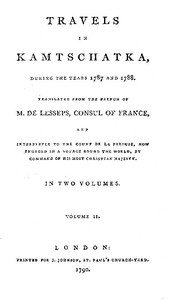
Travels in Kamtschatka, during the years 1787 and 1788, Volume 2 by Lesseps
This isn't your typical swashbuckling travelogue. Travels in Kamtschatka, Volume 2 picks up with Jean-Baptiste de Lesseps, a young French vice-consul, in a very peculiar spot. He was part of a grand scientific voyage, but was chosen to carry important dispatches overland from Siberia back to France. This volume covers his agonizingly slow journey west from the remote Kamchatka Peninsula.
The Story
The plot is simple on the surface: a man tries to get home. But the devil is in the details. Lesseps is stuck. He's at the mercy of the Russian imperial administration. His journey is a stop-start parade of waiting for horses, for guides, for official permits, and for the weather to break. He moves from one remote outpost to another, each a tiny island of warmth and chatter in a vast, frozen landscape. The "action" is in the conversations—negotiating with a Cossack captain, sharing a meal with a local merchant, observing the indigenous Itelmen people. The drama is subtle, born from frustration, cultural confusion, and the sheer weight of distance. It's a story about patience, or the lack thereof.
Why You Should Read It
I loved this because it feels honest. Lesseps doesn't cast himself as a hero. He gets bored, he gets frustrated, he complains about the food. His observations are sharp and often funny. You feel the texture of 18th-century Siberia through his eyes: the smell of fish oil, the crunch of snow, the interminable politeness of official meetings. The book's power comes from its quiet focus on human connection in isolation. It’s less about conquering the wilderness and more about learning to sit with it, and with the people who call it home. He becomes a keen student of the social rhythms of a world completely alien to him.
Final Verdict
Perfect for readers who love real historical diaries and want an unvarnished look at the past. If you enjoy stories about remote places, cultural encounters, or the quiet humor found in daily frustration, this is a treasure. It's not a fast-paced adventure; it's a slow, thoughtful walk through history with a very relatable, slightly grumpy companion. You'll come away feeling like you've truly visited another time.
This digital edition is based on a public domain text. You can copy, modify, and distribute it freely.
James Nguyen
1 year agoLoved it.
Paul Taylor
4 weeks agoThis is one of those stories where the character development leaves a lasting impact. This story will stay with me.
Deborah Martin
1 year agoMy professor recommended this, and I see why.
Thomas Lee
1 year agoWow.




George Wilson
9 months agoFive stars!