
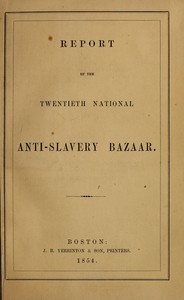
Report of the Twentieth National Anti-Slavery Bazaar by A. W. Weston
Let's be clear from the start: this is not a novel. Report of the Twentieth National Anti-Slavery Bazaar is exactly what the title says. Written by A.W. Weston, a prominent organizer, it details the planning, execution, and financial outcome of a major fundraising event held in Boston in 1854 to support the American Anti-Slavery Society. The 'plot' is the bazaar itself. Weston walks us through the committee work, the solicitation of donated goods (everything from fancy needlework to autographed books from famous authors), the setup of the stalls, and the final tally of money raised to fund the fight against slavery.
The Story
The story here is one of logistics and community. Weston outlines the massive effort behind the scenes. She lists the items sold, often noting who donated them—names like William Lloyd Garrison and Harriet Beecher Stowe pop up. She details the challenges, like securing a venue in a city where pro-slavery sentiment could turn violent. There are accounts of the crowds, the speeches given, and the palpable sense of purpose. The climax is the financial report: how much money was made and exactly where it was going—to print pamphlets, fund lecturers, and support the underground network. The resolution isn't tidy; it's a call to action for the next year's fight.
Why You Should Read It
This book removes the glossy, historical-drama filter and shows you the gears of activism. It's incredibly grounding. These weren't just figures from history books giving speeches; they were people running a complex, year-long fundraiser. You see the blend of traditional 'women's work' (sewing, organizing) with radical political goals. Reading Weston's straightforward account makes the abolitionists feel real, strategic, and resourceful. It highlights how social change requires not just big ideas, but also bake sales, budgets, and a lot of volunteer hours. It gave me a whole new appreciation for the grind behind the glory.
Final Verdict
This is a niche but powerful read. It's perfect for history buffs who want to move beyond biographies and battle dates to understand the mechanics of a movement. It's also great for anyone involved in community organizing or nonprofit work—you'll see your modern struggles reflected in 1854. If you prefer a strong narrative with characters, this isn't it. But if you're curious about the raw, unvarnished paperwork of making history, this report is a unique and surprisingly compelling window into the past.
This work has been identified as being free of known copyright restrictions. Access is open to everyone around the world.
Daniel Young
1 year agoThe formatting on this digital edition is flawless.
Christopher Taylor
5 months agoA bit long but worth it.
Ava Thomas
1 year agoBeautifully written.
Anthony Lopez
8 months agoThe formatting on this digital edition is flawless.
Jennifer Jones
1 year agoGreat reference material for my coursework.